Toilet Overflow or Sewage Coming Up Through a Drain?
Stop using affected fixtures and keep people and pets away from the wastewater. Avoid walking it into adjoining rooms or aiming fans across contaminated surfaces.
A toilet overflow can remain around the bathroom or spread under a door into carpet. A sewer backup may appear at a lower drain while fixtures elsewhere still seem to work. Those situations need the source assessed as well as the water removed. Clearing the blockage does not clean materials that wastewater already reached.
Fort Worth Water distinguishes a possible city-main problem from a private lateral blockage. Its sewer guidance asks residents to stop household water use when wastewater is backing up. A plumber or the utility investigates the flow problem; cleanup planning accounts for the contaminated room, floor transitions and materials underneath.
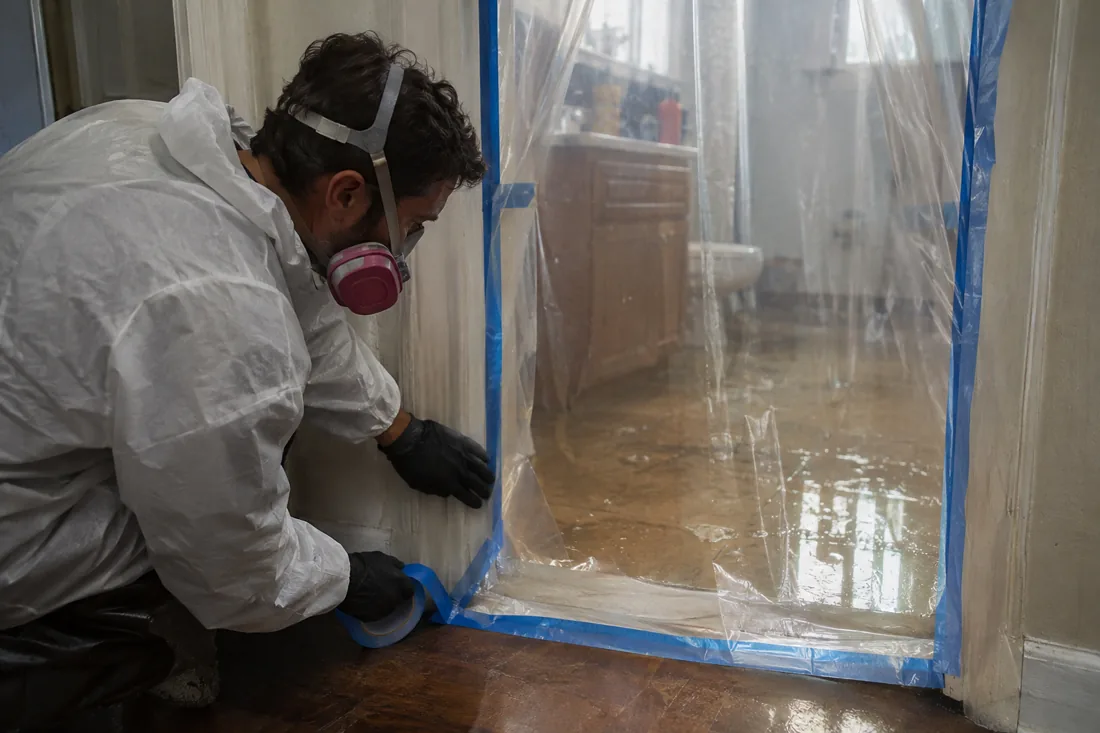
How a Wastewater Cleanup Area Is Set Up
- Call and explain what happened.
A specialist asks about the water source and the rooms affected.
- We find where the water went.
Moisture checks locate wet materials, including inside walls and under floors.
- Water removal and drying.
Standing water comes out first. Drying equipment goes where it is needed.
- Checked dry before repairs.
Materials are confirmed dry before anything is closed up or replaced.
Water still spreading? Call now to speak to a specialist.
(XXX) XXX-XXXXSeparate the Drain Problem From the Contaminated Room
Flushing another toilet or running a washer can add wastewater to a blocked line. Keep affected fixtures out of use until the source has been investigated. The utility may need to check a public-main issue, while private drainage repairs require the appropriate plumbing work. Report the pattern of the backup rather than assuming every slow drain has the same cause.
The cleanup assessment records where wastewater emerged and how far it traveled. Water under a vanity, around a toilet base or inside an adjoining closet can be missed if attention stays on the drain opening. The plan also identifies a route for equipment and removed materials that avoids occupied areas where possible.
Porous Materials Need More Than a Surface Wipe
Carpet padding, paper-faced drywall and insulation can retain contamination within their structure. A sprayed cleaner on the top surface does not establish that the material underneath has been cleaned. Removal decisions depend on what was exposed and whether the item can be cleaned and dried through its full thickness.
Tile itself may be less absorbent than the materials around it, but joints, wall edges and floor penetrations still need examination. A tiled bathroom can conceal wet wallboard or a damp wood subfloor. Cleaning a hard surface and drying a concealed assembly are different parts of the job; one cannot stand in for the other.
| Affected assembly | Decision that needs checking |
|---|---|
| Carpet and pad | Whether contaminated porous layers require removal |
| Vanity or wall base | How far wastewater reached behind the finished face |
| Tile at a doorway | Whether water passed into the next floor assembly |
| Drywall or insulation | Whether the exposed material can remain safely |
A Controlled Removal Route Keeps Waste Out of Dry Rooms
The work area is separated before contaminated items are moved. Equipment placement, protective measures and disposal handling follow the water's condition and the room layout. A wet rug should not be dragged through a clean hallway. Stored items are sorted by their exposure and their ability to be cleaned, with damaged materials documented before disposal when practical.
After wastewater removal, accessible surfaces are cleaned using methods appropriate to their material and the cleaning product. Different chemicals should not be mixed. Occupants should stay clear of the working area, particularly where flooring or wall material is being removed. The plan should explain how access to another bathroom or an exit will be maintained.
Drying Begins After the Contamination Decisions
Moving air across a contaminated surface before cleanup can spread material into adjacent spaces. The sequence is source control, contained removal, cleaning and then the drying work appropriate to what remains. A wood floor or wall plate may still be damp after the visible wastewater and damaged finish layers have been removed.
Material readings guide that next stage. A dry tile face does not prove the backing beneath it is dry, and a cleaned cabinet face does not reveal its bottom panel. Structural drying and dehumidification address retained moisture after the removal and cleaning decisions have been made.
Odor or New Dampness After the Backup Has Stopped
A continuing odor can have more than one source. It may come from exposed drain conditions, contaminated material that was missed or an assembly that remains wet. The work should revisit the source and the concealed areas instead of covering the odor with a fragrance. New wastewater at the same opening needs another plumbing investigation.
If delayed access has left suspected growth on building materials, mold removal planning may become part of the work. Soaked textile flooring also requires specific carpet and padding decisions. Keep the observed contamination history in the cleanup record rather than treating the room as a recent clean-water leak.
The water damage planning tool includes water condition because contaminated materials can change the scope substantially. Its area entry does not account for every disposal or access requirement. An assessment of the actual exposed assemblies is needed before deciding what can remain.
Sources: Fort Worth sewer guidance, CDC contaminated-material cleanup, EPA cleanup methods.
Drying and Material Work After a Sewer Backup
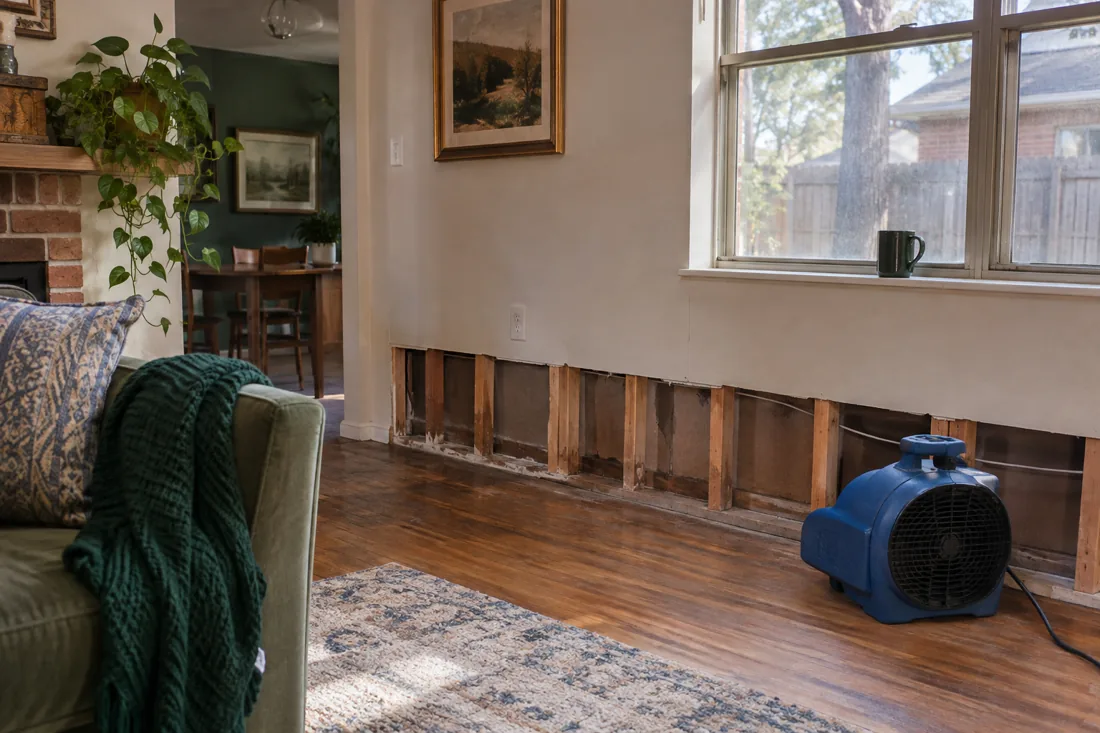 Structural Drying & DehumidificationMoisture trapped in framing, wall insulation, subfloors and cabinet bases after visible water is removed.
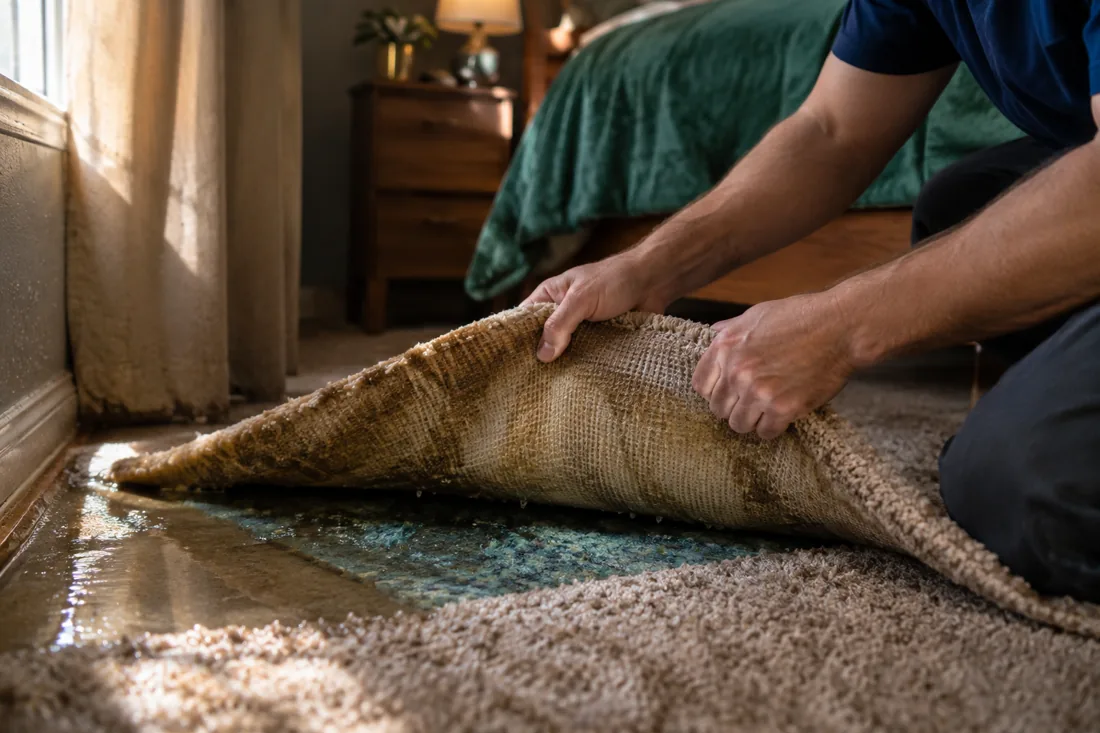 Carpet Water Damage RestorationWet carpet backing and saturated padding holding water against the subfloor after a room floods.
 Mold RemovalVisible or concealed growth on damp building materials that needs containment and controlled removal.