
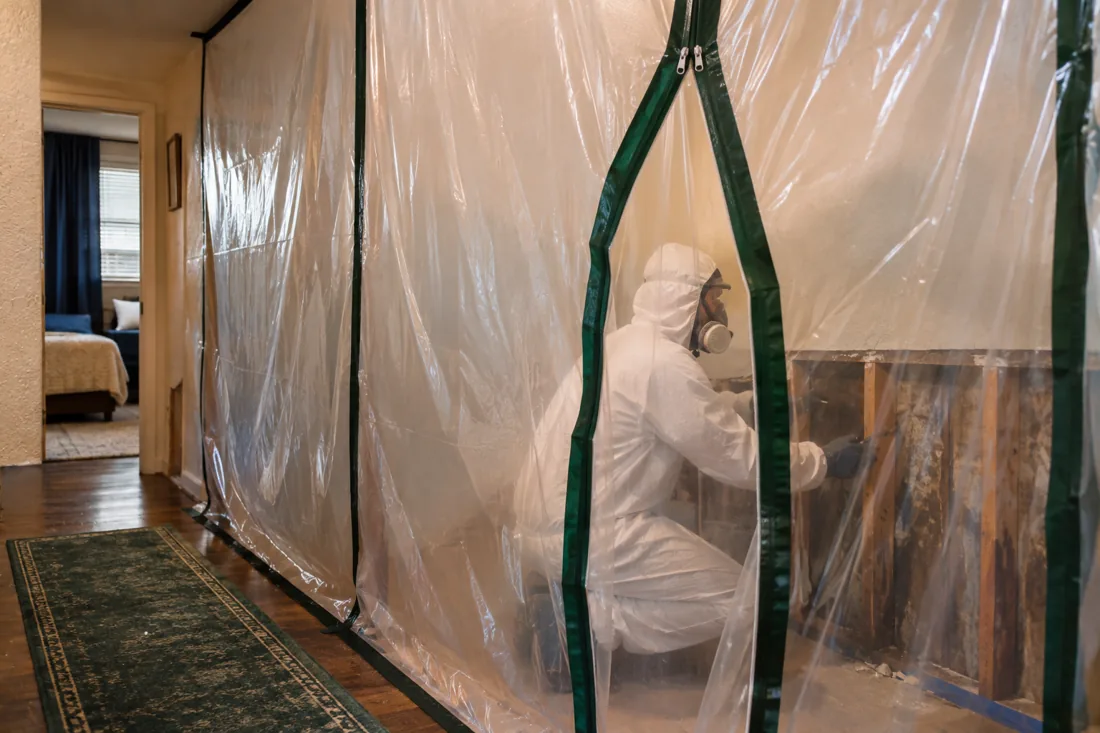
A Frozen Sprinkler Line Broke Above an Occupied Space
Notify building management and the fire-protection service provider. Follow alarm and occupancy instructions; do not improvise sprinkler-valve isolation or system restart.
Cleanup and fire-system work must be coordinated from the start. Water above a corridor or shop can enter ceiling tiles, partitions and several rooms before reaching a visible low point. At the same time, a damaged or isolated sprinkler line creates a separate protection-system issue that drying equipment cannot resolve.
Fort Worth Water notes that commercial fire sprinkler piping in unheated areas can rupture in freezing weather. The cleanup assessment uses the confirmed system history and the building layout to map affected materials. Management and fire-protection personnel handle system isolation and return-to-service decisions while the water damage scope is established.
Organizing Sprinkler Water Cleanup Around Building Operations
- Call and explain what happened.
A specialist asks about the water source and the rooms affected.
- We find where the water went.
Moisture checks locate wet materials, including inside walls and under floors.
- Water removal and drying.
Standing water comes out first. Drying equipment goes where it is needed.
- Checked dry before repairs.
Materials are confirmed dry before anything is closed up or replaced.
Water still spreading? Call now to speak to a specialist.
(XXX) XXX-XXXXProtection-System Decisions Stay With the Responsible Personnel
A shut valve is not simply a water-cleanup convenience when it affects fire protection. The building's responsible personnel need to manage isolation, notifications and the conditions for using affected spaces. Cleanup staff should receive the source status and access instructions rather than treating the damaged line as ordinary household plumbing.
Keep staff or residents away from wet electrical areas and unstable ceiling material. If an alarm or building instruction requires evacuation, follow that direction. A corridor needed for access or exit should not become an equipment storage route. The removal plan must fit the occupancy decisions already being managed for the building.
Sprinkler Water Can Cross Partitions Above the Ceiling
A line above a suspended ceiling can release water into a concealed space shared by several rooms. Tiles may show the first evidence while insulation, wall tops or cable penetrations carry water farther. The inspection therefore needs access to adjoining areas and a record of which rooms are occupied or restricted.
In multifamily buildings, management may need to coordinate entry to separate units. A stain in one corridor cannot establish the boundary inside the next room. The scope should identify locations that could not yet be inspected so they are not silently treated as unaffected. Conditions below raised equipment or shelving also need consideration.
| Responsible area | Information cleanup needs |
|---|---|
| Building management | Occupancy restrictions, access permissions and resident or staff routes |
| Fire-protection provider | Source isolation and system status |
| Electrical assessment | Wet equipment or circuits that restrict safe work |
| Material inspection | Affected ceiling spaces, partitions and floor assemblies |
Water Condition Depends on the System and What It Contacted
A sprinkler release should not be assigned a cleanup method solely because the system connects to a water supply. The line's condition and the materials the water has crossed matter. Debris, storage contents or contact with other building areas can affect the handling decisions made during extraction and removal.
The assessment records that history before equipment or wet items are moved through occupied rooms. Ceiling tiles, insulation and floor coverings may need different retention decisions. Damaged porous material cannot be made suitable for reuse just by drying its visible face. Disposal handling and access routes should be described before the work area is opened.
Stage the Drying Work Around Access and Room Use
Accessible standing water is removed once source and safety conditions permit it. Retained walls, flooring and ceiling assemblies are then checked for moisture. Equipment placement considers exits, accessible routes and the activities that can continue in unaffected spaces. Commercial water damage restoration addresses those operational details as part of the material work.
A wet overhead assembly may also need ceiling water damage assessment. The opening needed for drying should follow the wet material, not just the tile where water first fell. Source repair, equipment operation and later ceiling reinstatement need a shared sequence so one stage does not obstruct another.
Reopening a Room and Restoring the Sprinkler Are Different Findings
A material-drying record does not certify the condition of the fire-protection system. Conversely, a repaired sprinkler line does not establish that the ceiling cavity or floor beneath it is dry. Each responsible provider should address its own findings before management decides how the affected space will be used.
Follow-up structural moisture checks revisit the mapped locations, including areas that required delayed access. Fresh staining or renewed dampness after system work calls for another source and material review. Inventory, furniture and tenant possessions should not conceal those locations before the review is complete.
The freeze checklist helps organize general preparation and after-thaw observations. It does not authorize occupants to operate sprinkler valves or substitute for a building-specific protection plan. Cleanup scope remains tied to the actual affected assemblies and the access permitted by the building's responsible personnel.
Sources: Fort Worth fire sprinkler freeze guidance, EPA commercial building cleanup.
Building Cleanup Connected to a Frozen Sprinkler Line
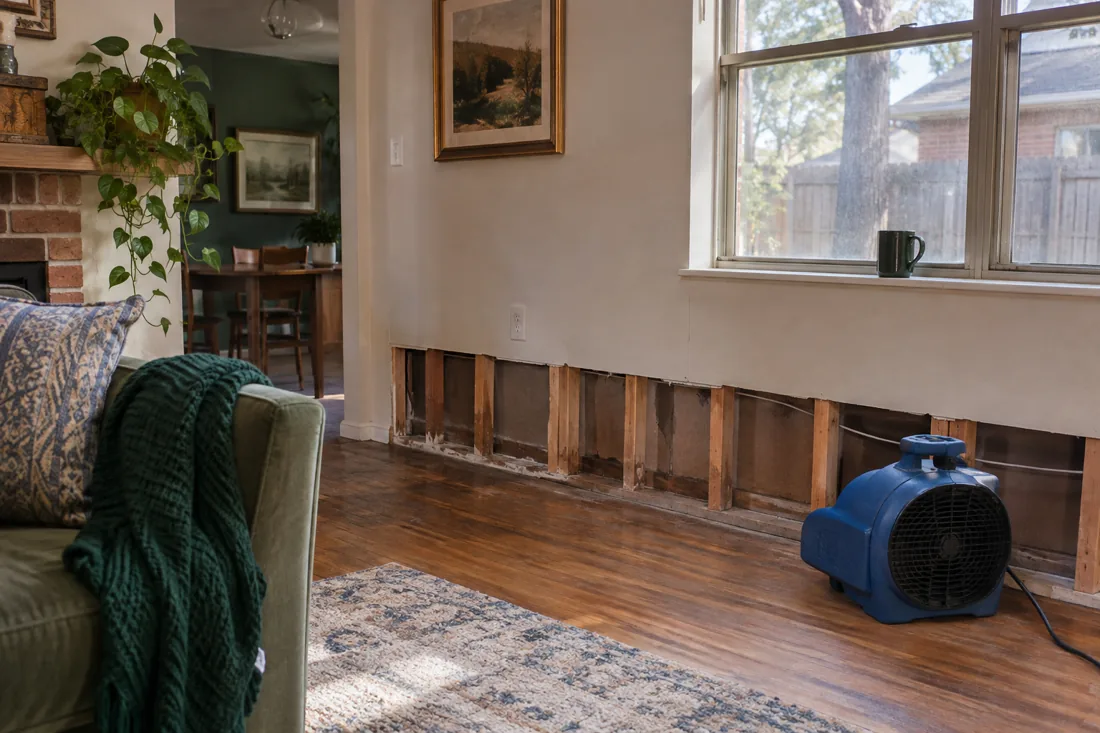 Structural Drying & DehumidificationMoisture trapped in framing, wall insulation, subfloors and cabinet bases after visible water is removed.
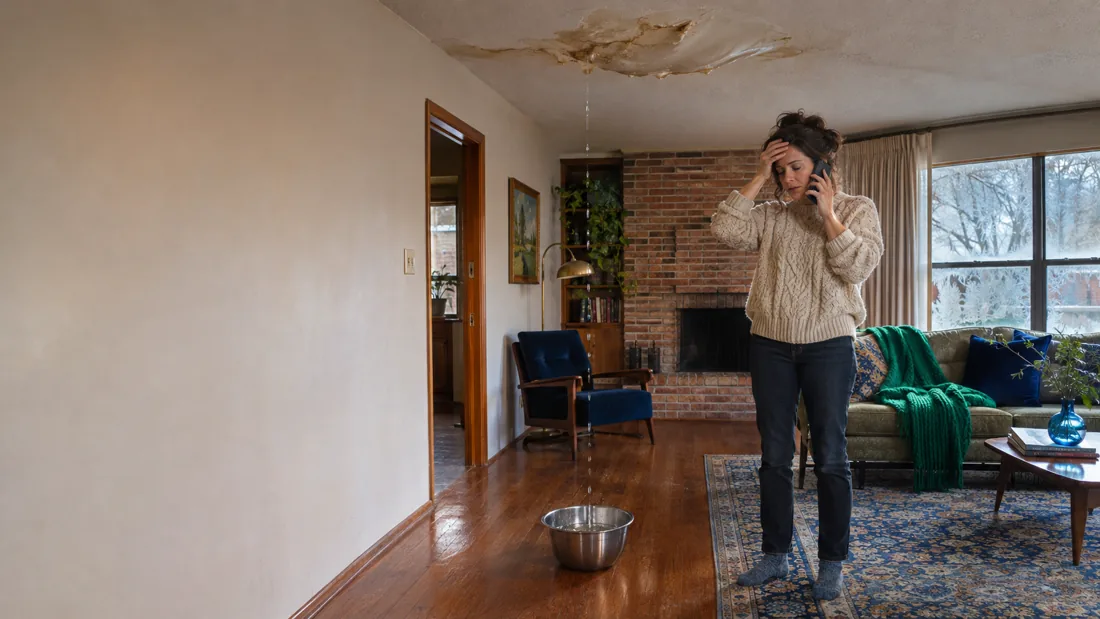 Ceiling & Attic Water DamageOverhead leaks saturating ceiling drywall and insulation before drips appear inside the occupied room.
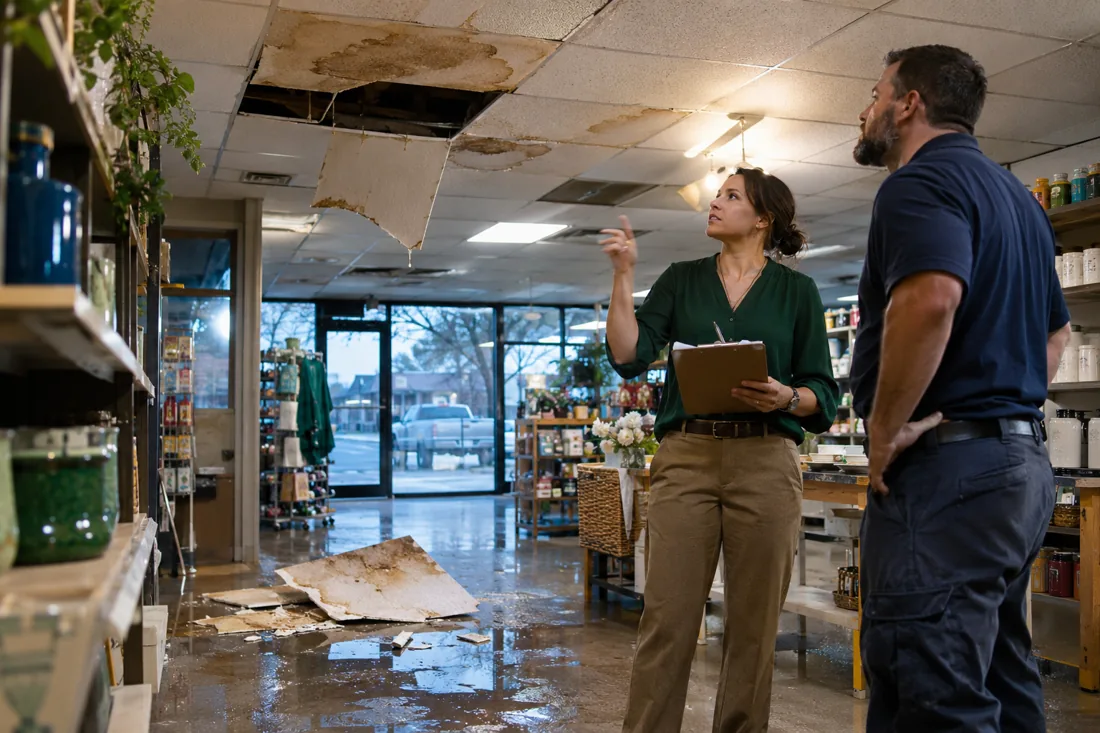 Commercial Water Damage RestorationWater affecting occupied workspaces, inventory areas and customer routes that need coordinated cleanup and drying.