
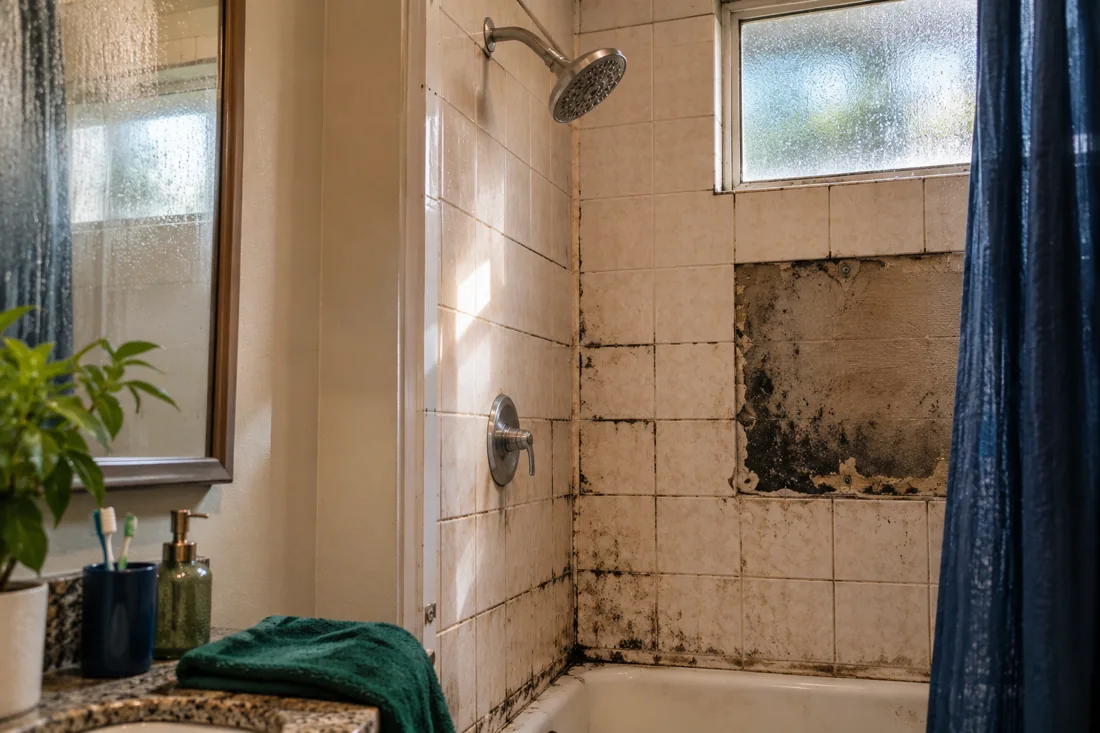
Bathroom Growth That Returns After Cleaning Needs Another Look
Avoid disturbing a suspected affected wall cavity. Stop a known leak if its valve is safe to reach, and keep the source repair separate from surface cleanup.
A bathroom can stay damp from water use, poor moisture removal or a concealed plumbing or shower-assembly leak. These conditions call for different corrections. A dark caulk line does not establish the condition of the backing behind tile, while a swollen vanity panel suggests an assembly that needs more than a surface wipe.
In a remodeled Fort Worth bathroom, newer tile or a replacement vanity may cover older wall and floor materials. The inspection uses that actual assembly and the leak history. It should not assume the latest visible finish is the only layer that got wet or that every recurring mark has the same cause.
Separating Bathroom Surface Growth From Concealed Water Damage
- Locate the recurring moisture.
Shower use, plumbing and room ventilation guide the questions.
- Assess the affected assembly.
Tile backing, wall cavities and vanity panels may need separate access.
- Control material cleanup.
The scope distinguishes cleanable surfaces from affected porous layers.
- Review before sealing.
Source and retained-material conditions are checked before finish repairs.
Water still spreading? Call now to speak to a specialist.
(XXX) XXX-XXXXShower Humidity and a Wall Leak Are Different Problems
An exhaust route that does not remove moisture from the room needs a different correction from a leaking valve behind the shower wall. The timing of the dampness helps frame the investigation. Record whether a cabinet becomes wet during fixture use, whether a wall remains damp between uses and whether the mark extends beyond a splash area.
Ventilation work cannot repair a failed plumbing connection, and a new plumbing fitting cannot remove growth from damaged backing. The source provider and material cleanup scope need to address their separate findings. Avoid repeatedly running a leaking fixture to demonstrate the condition while it is continuing to wet the assembly.
Tile Can Hide an Affected Backing Layer
The tile face may be reachable for cleaning while the assembly behind it is wet or deteriorated. Loose material, swelling at an edge or a damp adjoining wall needs investigation. The grout line alone cannot describe the back of the wall, and a new sealant bead does not establish that the concealed material is sound.
Access should be planned before tile or wallboard is disturbed. Removal can release debris and may expose materials needing a different handling method. Where the extent is uncertain, mold inspection and assessment decisions help define the question and the applicable project scope.
| Location | What should be investigated |
|---|---|
| Shower edge or tile joint | Surface moisture versus wet backing |
| Vanity bottom | Supply or drain leakage and panel condition |
| Wall outside the shower | Moisture spreading beyond the splash area |
| Floor beside the tub | Finish layers, support and nearby wall base |
Vanity Cavities Can Stay Damp Behind a Clean Door Face
A slow leak inside a vanity can soak its bottom panel and the wall behind stored items. The front door may look normal while the panel edges swell. Emptying the cabinet from a safe position can make observations easier, but a damaged fixed base still needs a plan for access and material retention.
If the leak has reached the floor assembly, structural drying may be needed alongside cleanup of affected surfaces. The wet location should be checked directly rather than assuming the cabinet is dry because its contents have been removed. The plumber's source repair and the cabinet's condition are separate findings.
Cleanable Surfaces and Porous Damage Need Different Decisions
A defined scope can include cleaning suitable accessible surfaces and removing material that cannot remain. The method depends on the material and the extent, with controls to keep affected debris within the work route. Painting over a damp mark or repeatedly applying a chemical does not establish that the backing or moisture source has been addressed.
A broader affected wall or connected room may need wall-cavity mold cleanup. The boundary should follow the investigation rather than ending at the bathroom doorway automatically. Keep occupants and belongings away from the area where affected material is being opened or removed.
Before the Shower or Vanity Finish Is Closed Again
The repair sequence should account for source correction, cleanup and the condition of retained materials. Replacement tile, caulk or a cabinet panel can otherwise hide a location that still needs a moisture check. Any assessment and completion requirements applicable to the project need to be addressed before that access is lost.
After the room returns to use, a new damp edge or an odor that recurs at the same cabinet deserves another look. Note whether it follows bathing or fixture use and keep earlier repair information available. A recurring condition should be investigated at the material level instead of treated as proof that the room simply needs stronger cleaning products.
The mold planning calculator includes location and concealed growth because a tile-backed cavity differs from an accessible hard surface. Access, damaged panels and connected flooring can affect the actual scope beyond the size of the visible mark. Those conditions belong in the discussion before repairs begin.
Sources: Texas mold consumer guidance, EPA hidden moisture investigation, EPA material remediation.
Assessment and Drying for Concealed Bathroom Damage
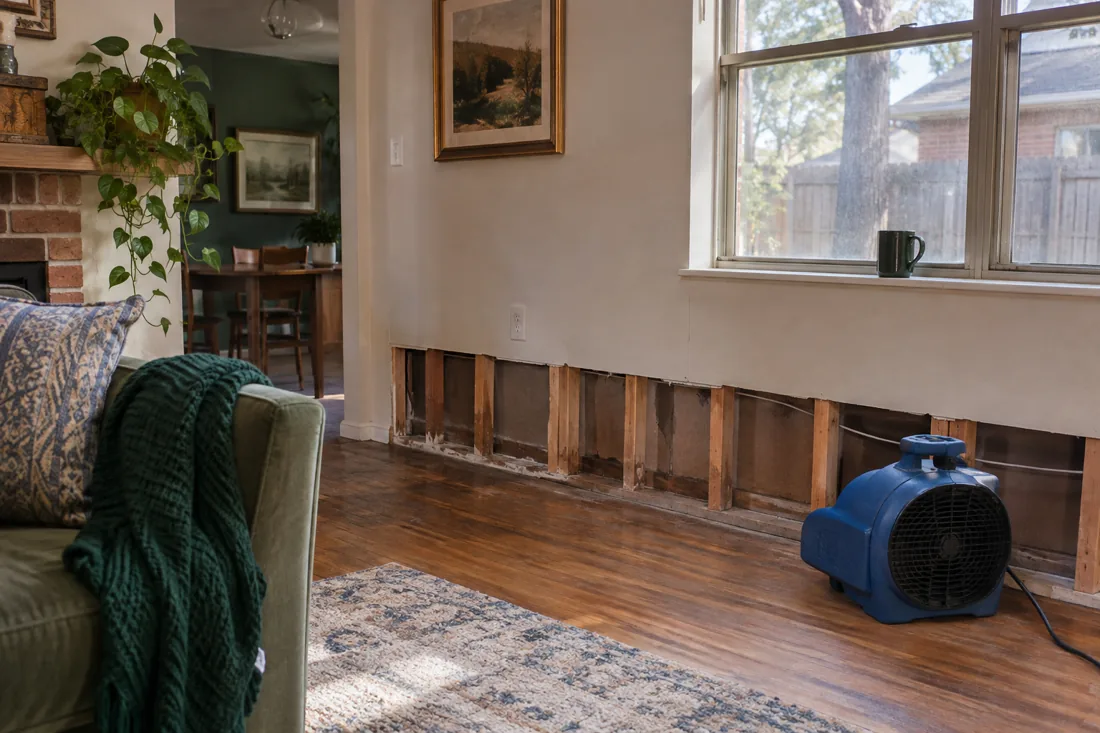 Structural Drying & DehumidificationMoisture trapped in framing, wall insulation, subfloors and cabinet bases after visible water is removed.
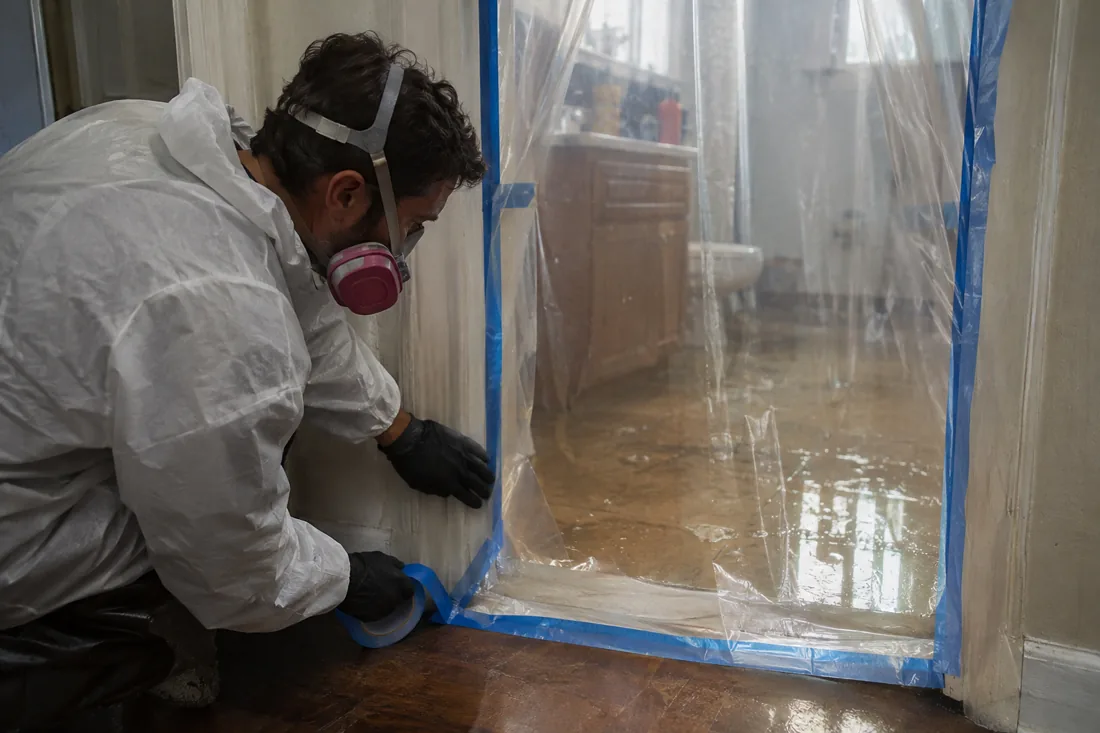 Mold RemovalVisible or concealed growth on damp building materials that needs containment and controlled removal.
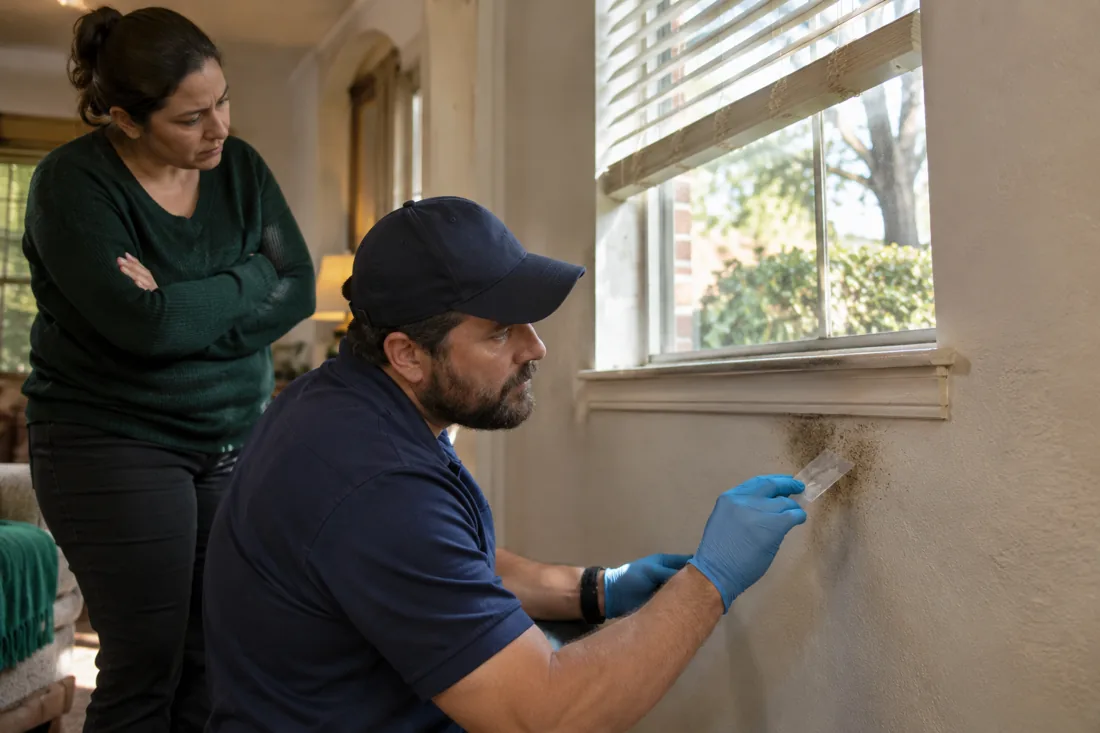 Mold Inspection & TestingUnexplained damp odors and suspected growth requiring a closer look at moisture and affected surfaces.