
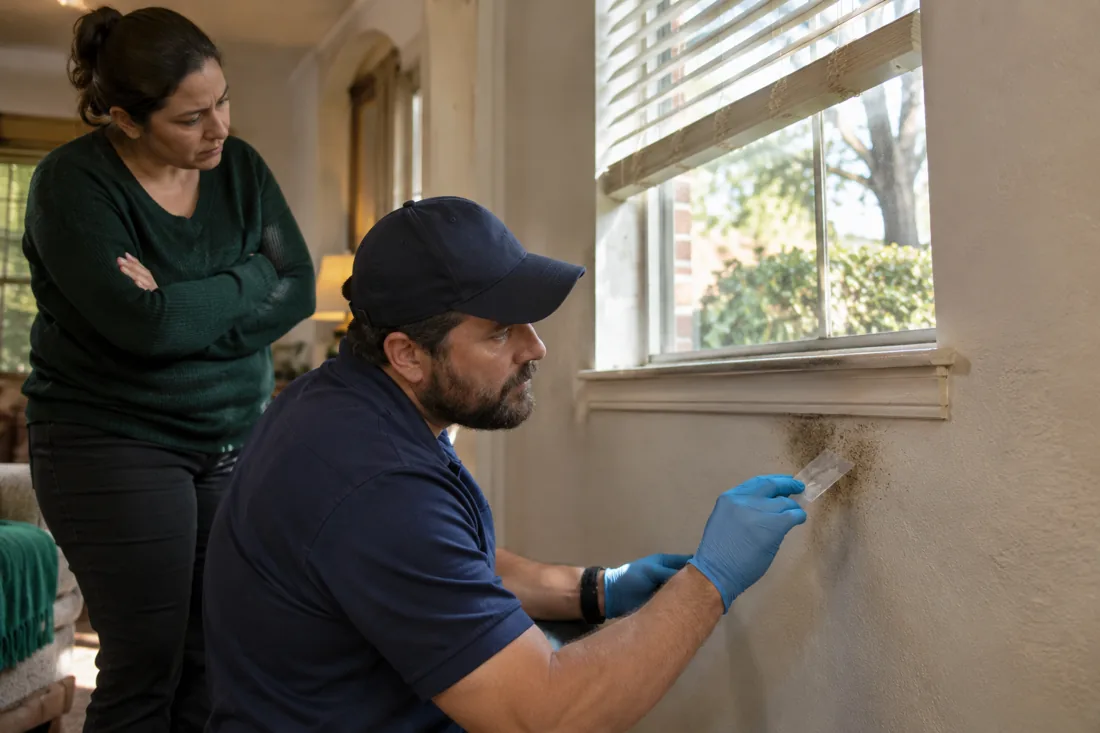
What Is the Mold Inspection Trying to Resolve?
Start with the location, leak history and visible condition. A sample is useful only when its purpose and limits are clear.
A musty closet, a stained attic board and a mark around a register are different investigation problems. Inspection looks at the building condition around each one. Testing may be considered where it answers a specific question, but a laboratory result cannot show every damp cavity or identify the source of an active leak.
Texas regulates mold assessment and remediation activities. Any required assessment must be arranged within those rules, including separation of roles where required. Call to discuss the property conditions and the assessment route rather than assuming the same company or visit can perform every assessment, cleanup and completion function.
From a Reported Mold Concern to Useful Inspection Findings
- Review the history.
Record leaks, odors, room use and earlier repairs.
- Inspect likely moisture routes.
Accessible materials and concealed-risk areas guide the investigation.
- Define any sampling question.
Samples are selected and interpreted through an assessment plan.
- Explain the next decisions.
Findings identify source work, cleanup scope or further access needs.
Water still spreading? Call now to speak to a specialist.
(XXX) XXX-XXXXBuild a Leak and Odor History Before Choosing Samples
The timing of a concern can be useful. An odor after a washer cycle suggests a different investigation route from an attic stain after precipitation. Keep earlier repair information and photographs available. Record whether the condition changes when the air handler operates or when an enclosed room is opened.
Fort Worth's housing stock includes older structures and later construction, so an inspection cannot assume a standard wall or floor assembly from the neighborhood name. Additions, replacement flooring and enclosed spaces can change access. The assessor needs the actual layout and the observed water history before deciding where a concealed investigation is justified.
Moisture Readings and Thermal Patterns Need Interpretation
An instrument can help locate a suspicious area, but its reading depends on the material and method. A thermal pattern may direct attention without confirming water or mold. Accessible surfaces, dry reference locations and the assembly's construction provide context. The report should distinguish a measured condition from a conclusion that still needs access or sampling.
A visible room-side mark also does not reveal the whole back of the wall. If access is needed, its location and containment should be planned rather than opening the cavity casually during a walk-through. The inspection record should identify areas that were inaccessible so they are not mistaken for areas confirmed clear of a problem.
| Evidence | What it can help establish |
|---|---|
| Leak history | Where and when materials may have been exposed |
| Moisture measurement | Material condition at the checked location |
| Visual inspection | Accessible growth, staining or deterioration |
| Selected sample | The specific analytical question defined in the plan |
Visible Mold Does Not Automatically Require a Laboratory Test
EPA guidance says sampling is unnecessary in many cases where visible growth is already present. That does not mean every project has the same assessment requirements or that concealed conditions can be ignored. A proposed sample should be connected to a decision that could change the investigation or cleanup plan.
Ask what is being sampled, why that location was selected and what the result will mean. A short sample from one location does not describe every room or prove a source has been repaired. A sampling plan and the interpretation of results belong with the assessment role, rather than a promise that one number will settle every building question.
Assessment Findings Should Lead to a Defined Material Scope
A useful record separates the source problem, the observed affected materials and any areas needing further investigation. It should explain what the inspection could access and the next decision. If removal is indicated, mold cleanup planning uses the appropriate findings rather than replacing them with an informal color description.
The location can also change the next trade involved. A roof-space concern may require attic-specific cleanup and a source repair. A concern inside air distribution equipment may need HVAC and duct assessment. Those assemblies should not be opened or treated as identical wall surfaces.
A Test Result Is Not a Medical Diagnosis or a Drying Record
Laboratory identification and building moisture findings have different purposes. Sampling cannot diagnose an occupant's symptoms, and a favorable result does not by itself prove a concealed leak has stopped. Questions about health need the appropriate health care provider; building work needs its own assessment and material records.
Likewise, cleanup completion should follow the criteria applicable to the project. An inspection arranged before work is not interchangeable with a later review of the completed scope. Keep those roles, dates and findings distinct so a property owner can understand what has actually been checked.
The mold planning tool organizes area, location and concealed-access factors. It does not select samples, interpret laboratory findings or determine which Texas assessment documents are required. Those details need to be resolved for the actual property before cleanup decisions are finalized.
Sources: EPA sampling guidance, EPA investigation methods, Texas assessment requirements.
Cleanup Routes That May Follow the Inspection Findings
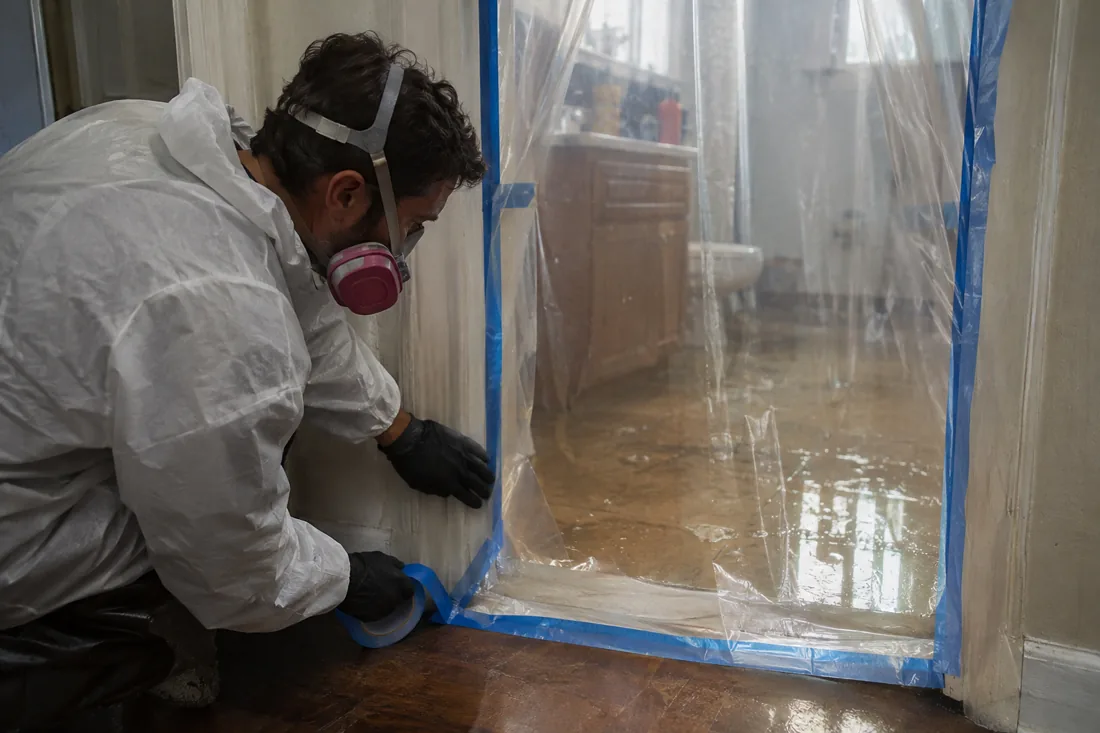 Mold RemovalVisible or concealed growth on damp building materials that needs containment and controlled removal.
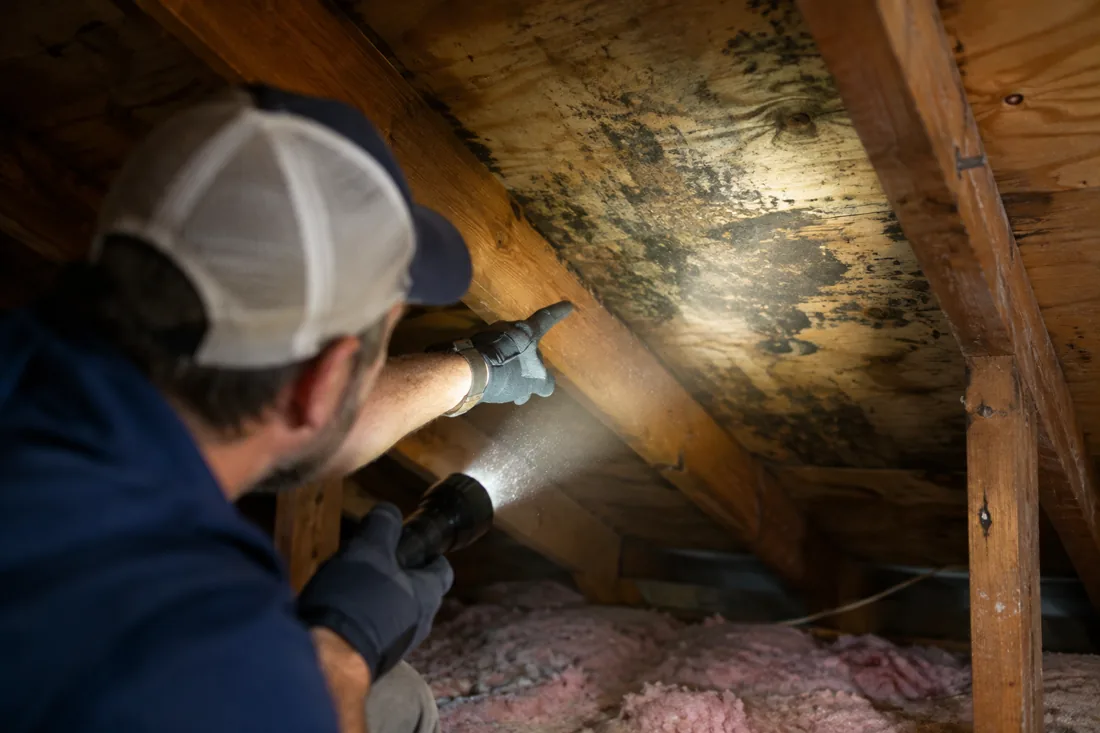 Attic Mold RemovalGrowth on attic roof decking or framing associated with roof leaks and persistent moisture.
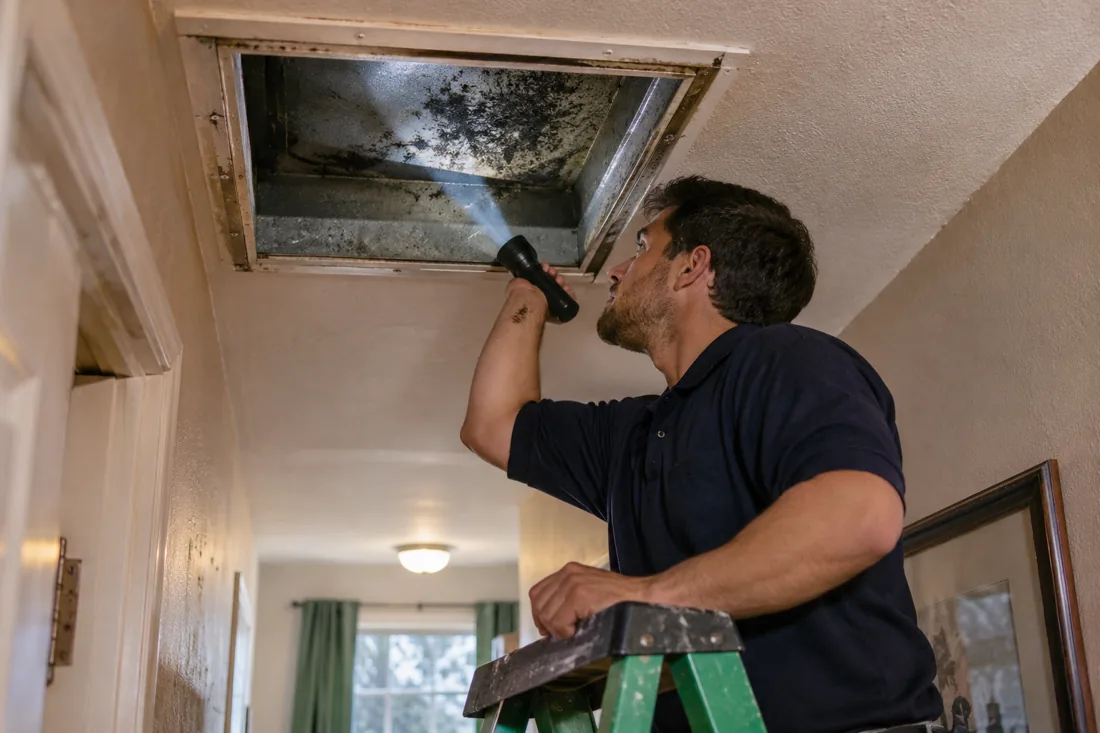 HVAC & Air Duct Mold CleaningSuspected growth around air handling equipment or duct components exposed to leaks or condensation.