
Standing Water in the House: Make the Room Safe First
Keep people out of water near outlets, appliances or extension cords. Shut off the household water supply only if its valve is reachable from a dry, safe place.
A broken supply connection can send water across several rooms before it shows at a doorway. Rugs, furniture bases and low cabinet openings interrupt its path, so the deepest puddle is not always beside the source. Emergency water removal starts with the source, the electrical conditions and a route for moving equipment without spreading water into unaffected rooms.
In a Fort Worth slab home, water may collect between the floor covering and concrete. A pier-and-beam floor adds another place to inspect underneath. The specialist identifies the floor assembly before deciding where extraction alone can help and where concealed moisture needs a separate drying plan.
From the First Call to Removing Standing Water
- Call and explain what happened.
A specialist asks about the water source and the rooms affected.
- We find where the water went.
Moisture checks locate wet materials, including inside walls and under floors.
- Water removal and drying.
Standing water comes out first. Drying equipment goes where it is needed.
- Checked dry before repairs.
Materials are confirmed dry before anything is closed up or replaced.
Water still spreading? Call now to speak to a specialist.
(XXX) XXX-XXXXWhich Shutoff Stops the Flow Into the Room?
If one appliance is leaking and its supply valve is safely accessible, isolate that connection. A failed pipe inside a wall may require the household main shutoff. Do not reach behind an appliance while standing in water, and do not operate a wet electrical panel. A plumber handles the damaged supply line while cleanup addresses water already inside the building.
Once the source is controlled, move loose belongings only from dry positions. Photograph the room and the visible water line before moving items. Keep wet cardboard away from dry storage, and avoid carrying saturated rugs across the rest of the house. Record where the water first appeared and whether it continued after the valve was closed.
A Clear Puddle Can Still Need Contamination Controls
The appearance of the water is not enough to select the cleanup method. Water from a supply line, a washing machine discharge and a backed-up toilet has contacted different materials. The specialist asks about that history before extraction equipment is moved through occupied rooms. Soil, waste or cleaning products can change handling even when the remaining water looks clear.
Describe the source rather than trying to assign a water category yourself. If a drain is involved, avoid using nearby fixtures until the backup is assessed. Sewage backup cleanup uses a different removal and cleaning approach from a recent indoor supply leak. Household fans should not push air across water or materials suspected of contamination.
How Extraction Reaches Edges, Thresholds and Low Spots
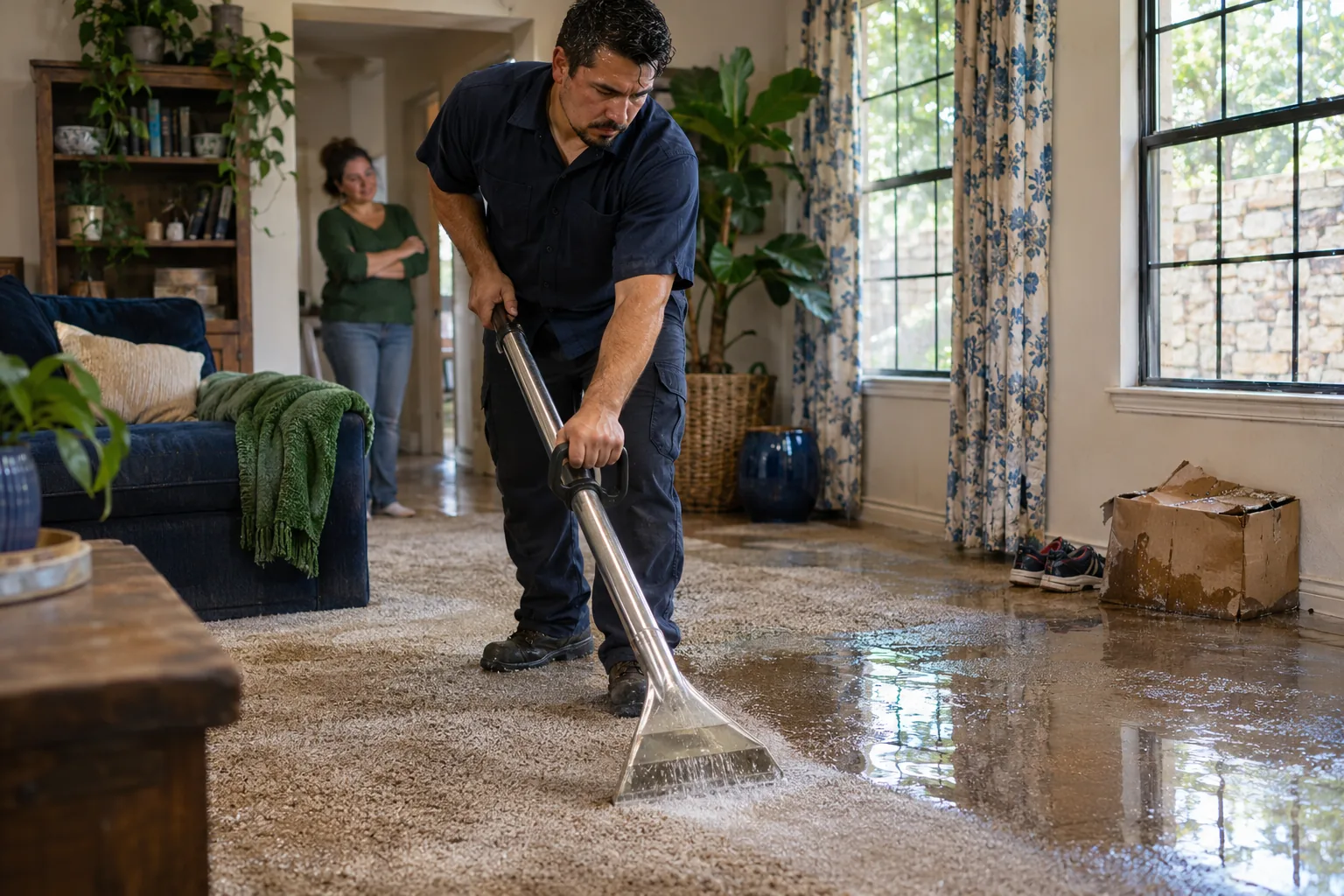
Accessible standing water is collected with equipment suited to its depth and the available route out. The work then moves to edges where water remains under a rug, beside a wall plate or around a cabinet toe kick. Repeated passes may be needed over absorbent flooring because water can move back toward the surface after the first pass.
Removing a puddle does not establish that the building is dry. The crew checks adjoining materials and follows readings beyond the visible edge. A doorway threshold or flooring transition can conceal a wet layer underneath an apparently dry room. Findings at those boundaries determine whether the next step is more extraction, controlled access or structural drying.
Places Worth Checking After the Floor Stops Shining
A baseboard can look unchanged while drywall behind it has absorbed moisture. A cabinet bottom may stay damp because the face frame blocks airflow. Carpet padding can also keep releasing water after the top fibers feel less wet. These are reasons to measure the assembly instead of judging the room by the size of its last puddle.
| Visible location | Concealed material to check |
|---|---|
| At a doorway | Flooring seams and the next room's perimeter |
| Beside kitchen cabinets | Toe-kick cavities and cabinet bases |
| Across carpet | Padding, backing and the subfloor |
| Along an exterior wall | Lower drywall, wall plate and nearby insulation |
Plan the Drying Work Before Returning Furniture
Dry furniture can obstruct the wet perimeter if it is pushed back too soon. Leave room for inspections and equipment, and keep cords and extraction hoses out of the remaining walkways. If a room must stay occupied, discuss its access route rather than moving a running air mover or dehumidifier without checking the drying plan.
Moisture readings taken after extraction establish what still needs attention. Later checks should show progress in the actual materials, including the subfloor beneath a rug or the bottom of a wall. An odor that develops after the water is removed, or trim that starts to lift, calls for another look. For soaked textile flooring, carpet water damage restoration addresses the backing and padding as separate layers.
Use the water damage planning calculator to organize the room size, source and materials once the immediate shutdown is handled. The assessment still needs the condition of those materials and access to the wet assembly. An online area measurement cannot show water beneath a fixed cabinet.
Sources: EPA material drying, CDC safe cleanup.
Cleanup That Often Follows a Standing Water Emergency
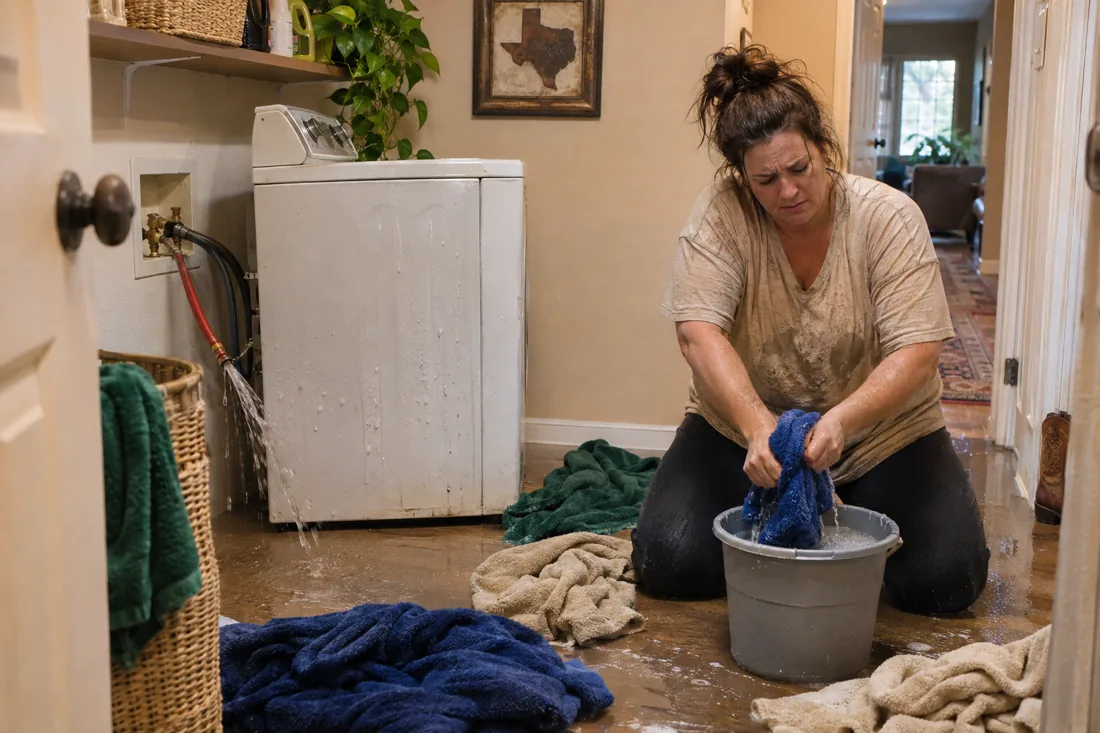 Sewage Backup & Toilet Overflow CleanupContaminated water from backed-up drains or overflowing toilets soaking nearby floors and porous building materials.
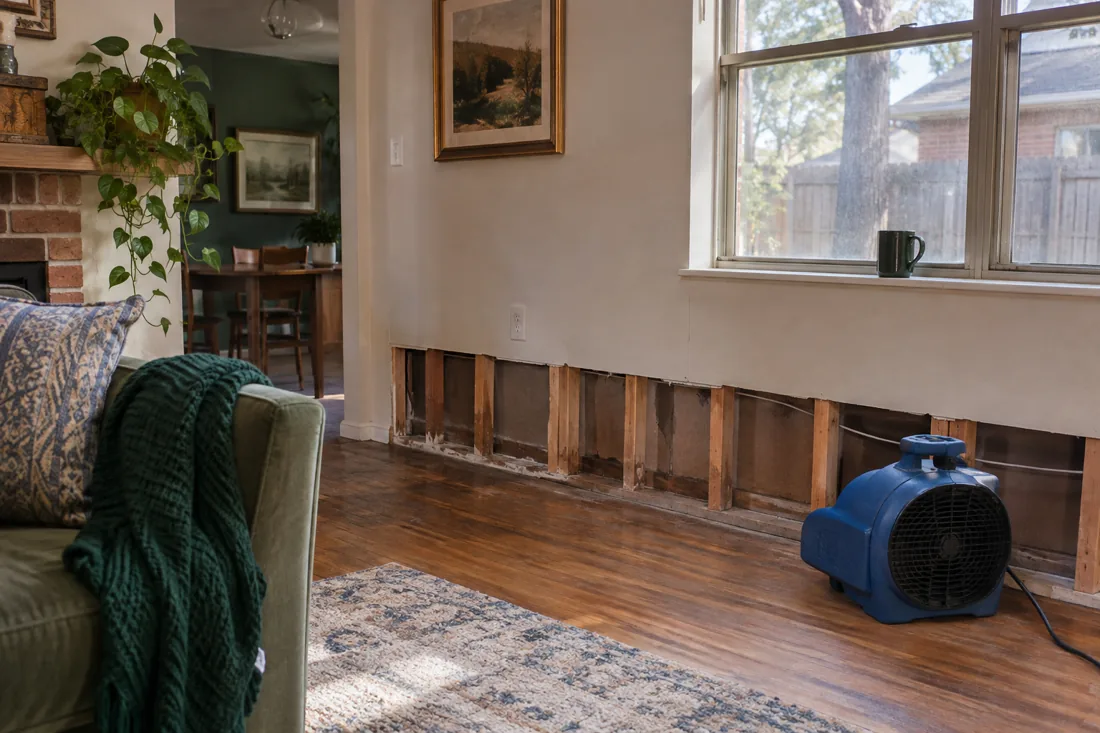 Structural Drying & DehumidificationMoisture trapped in framing, wall insulation, subfloors and cabinet bases after visible water is removed.
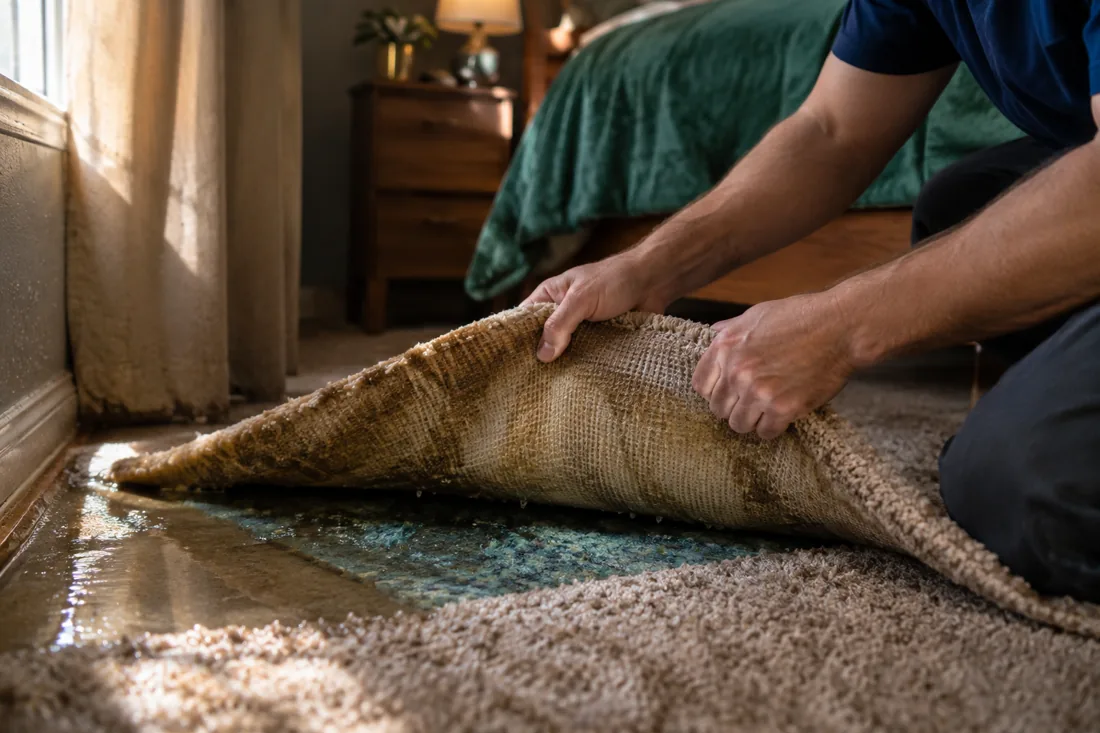 Carpet Water Damage RestorationWet carpet backing and saturated padding holding water against the subfloor after a room floods.