
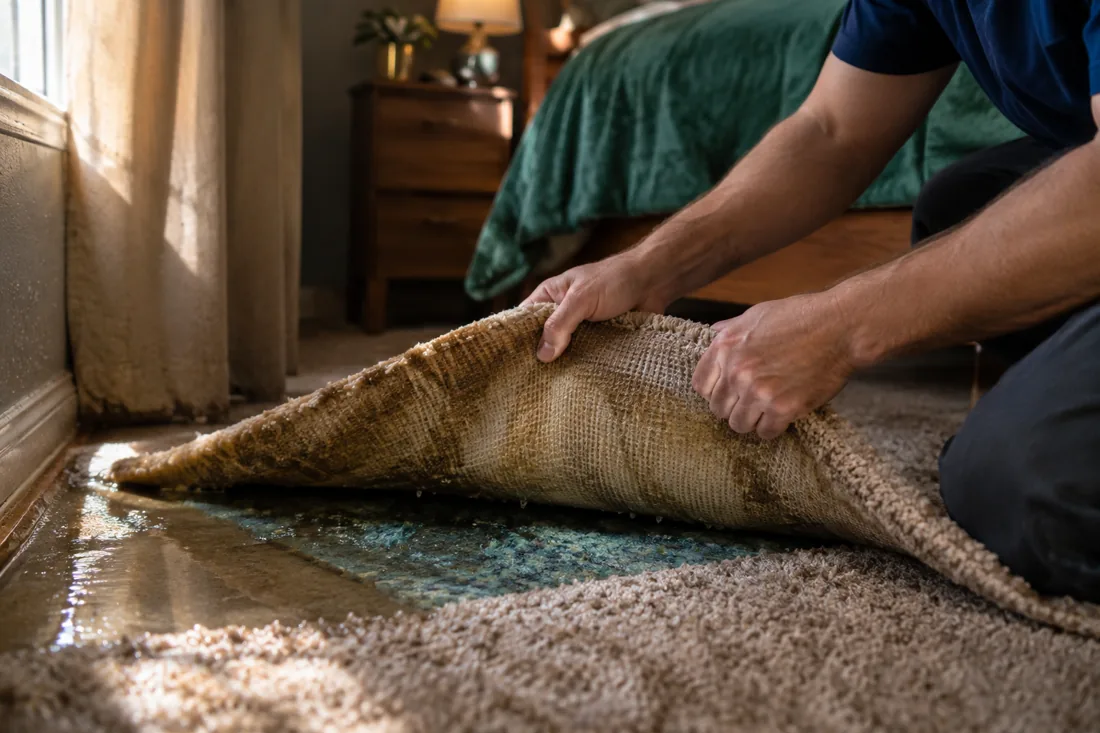
Carpet Feels Damp, Squishes or Has a Wet Edge?
Keep traffic off the affected carpet and stop the water source if safe. Walking across it can move water and soil into adjoining rooms.
The top fibers are only the visible layer. Padding can hold water against the floor, while backing, seams and tack-strip edges respond differently to the same exposure. A room that feels better after one extraction pass may still have a wet subfloor. The assessment checks those layers before deciding whether the carpet can remain.
Fort Worth carpet may cover a concrete slab, a wood subfloor or an upstairs floor over a finished ceiling. The construction changes where water collects and how the assembly can be inspected. A wet bedroom beside an overflowing laundry also needs its doorway and wall edges checked, not just the middle of the carpet.
Assessing Wet Carpet From the Surface to the Subfloor
- Call and explain what happened.
A specialist asks about the water source and the rooms affected.
- We find where the water went.
Moisture checks locate wet materials, including inside walls and under floors.
- Water removal and drying.
Standing water comes out first. Drying equipment goes where it is needed.
- Checked dry before repairs.
Materials are confirmed dry before anything is closed up or replaced.
Water still spreading? Call now to speak to a specialist.
(XXX) XXX-XXXXThe Water Source Comes Before a Carpet-Saving Decision
A recent supply-line leak and wastewater from a toilet have different cleanup needs. The carpet's color or the clarity of the puddle cannot establish its contamination history. The specialist checks where the water came from, what it contacted and how the affected room has been used before selecting the handling method.
Some contaminated porous materials cannot be kept by cleaning only their surface. If sewage is involved, keep the room separated from dry areas and arrange wastewater cleanup. Do not spread a damp rug into another room for drying or run household fans across suspected contamination. The backing and padding need the same exposure history as the visible fibers.
Why Padding Can Stay Wet After the Carpet Feels Better
Extraction from the top can remove substantial water without reaching every pocket in the padding. The pad may compress under furniture, hold moisture at its seams or keep a wood floor wet below it. A dry touch at the carpet surface therefore does not establish that the floor is ready to be covered again.
Access at an edge can help examine backing, padding and the floor condition, but pulling carpet loose introduces sharp tack strips and can damage its fit. Avoid lifting and dragging a saturated section yourself. The work plan identifies the access needed and separates drying decisions from later stretching, seaming or replacement work.
| Layer | Question to resolve |
|---|---|
| Fibers and backing | Can this carpet be cleaned and remain intact? |
| Padding | Is it contaminated, deteriorated or holding water? |
| Subfloor | Has moisture spread beneath the pad or into joints? |
| Perimeter | Are wall bases, tack strips or adjoining rooms also affected? |
Extraction, Access and Drying Without Hiding a Wet Floor
Water removal begins with the accessible wet carpet and adjacent hard surfaces. The next decision is whether to retain or remove each layer. Padding removal may expose the subfloor for drying even where the carpet itself is being considered for retention. The work should explain that distinction instead of treating the carpet and pad as one inseparable item.
Air movement and dehumidification then address the retained assembly. Equipment placement must account for furniture, room access and the exposed floor. A damp wood subfloor needs material checks, while concrete beneath the carpet has its own moisture condition. Structural drying covers those checks before the flooring layers are put back.
Odor, Ripples and Loose Backing Change the Repair Plan
Water exposure can affect carpet backing or the bond between layers. Ripples, separation or a seam that no longer lies flat are physical-condition issues, even if moisture has been reduced. Cleaning does not repair every change to the backing. The assessment should distinguish a material that can be dried from one that can be returned to use without a separate repair.
An odor can come from wet padding, trapped soil or concealed growth. It should be traced rather than covered with a fragrance. A newly damp wall edge or a floor that remains wet after the source is repaired also needs another look. These observations belong in the record used for drying and flooring decisions.
Before Furniture and Clean Belongings Return to the Room
The retained carpet layers and their support need a final review before furniture is returned. Heavy furniture can block access to a wet perimeter and can transfer stains to damp fibers. Keep the planned walkways open, and ask before moving equipment or replacing a rug over a floor that is still being checked.
If a washing machine or dishwasher caused the damage, the source repair must be confirmed separately from the carpet work. Appliance leak cleanup follows that water back to the cabinet or laundry connection so a second cycle does not wet the room again. Adjacent floor finishes may need their own inspection too.
Use the water damage calculator to list the room area, water source and affected materials. A carpet-only measurement can miss the wet wall base, the floor beneath the padding or the ceiling below an upstairs spill. Those findings determine the actual cleanup scope.
Sources: EPA carpet and backing guidance, CDC porous-material cleanup.
When a Carpet Spill Extends Beyond the Fibers
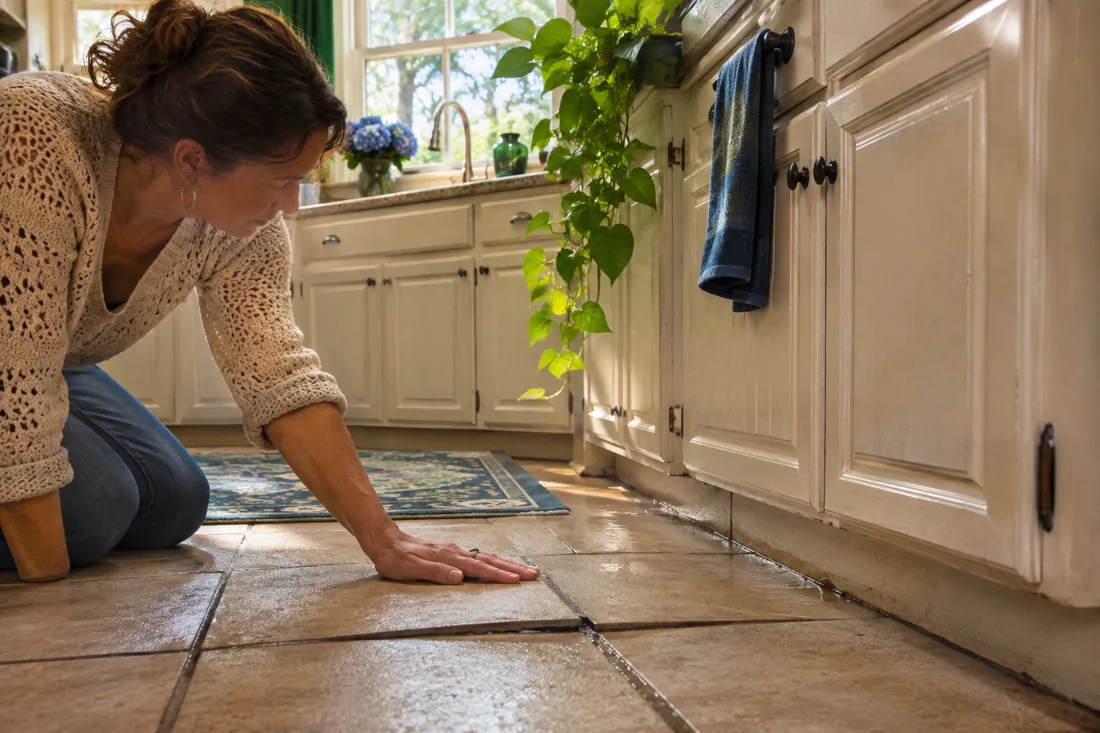 Appliance Leak Water DamageWasher hoses, dishwasher connections and ice maker lines leaking beneath kitchen cabinets or laundry flooring.
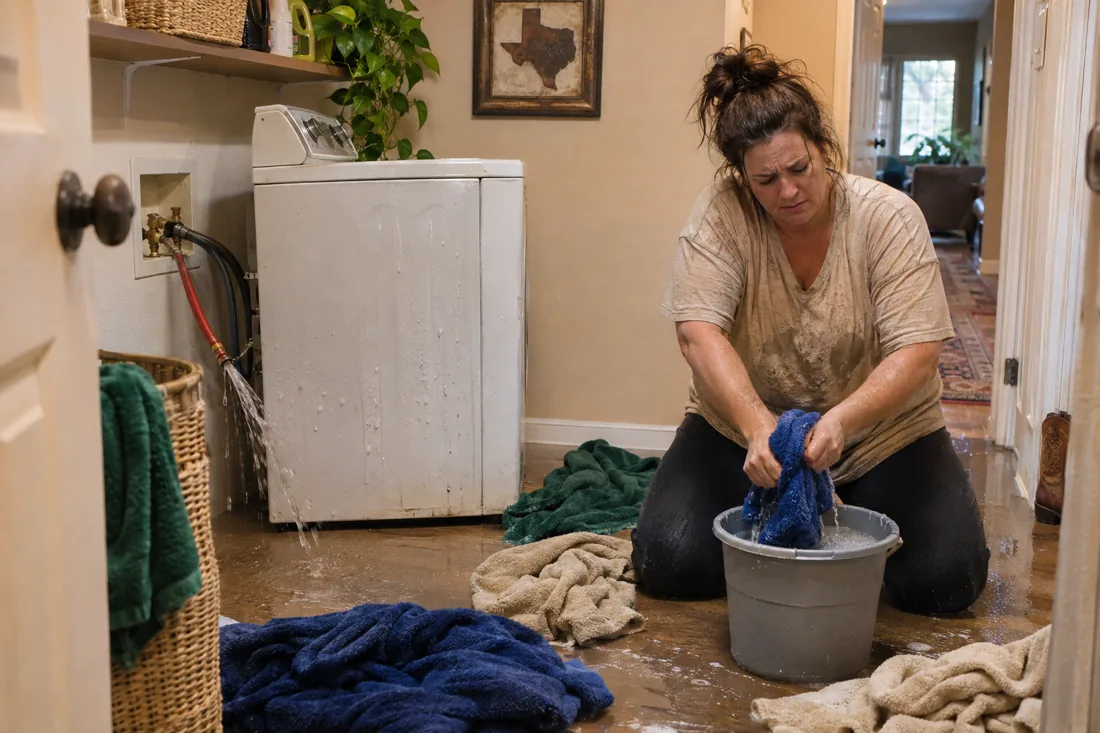 Sewage Backup & Toilet Overflow CleanupContaminated water from backed-up drains or overflowing toilets soaking nearby floors and porous building materials.
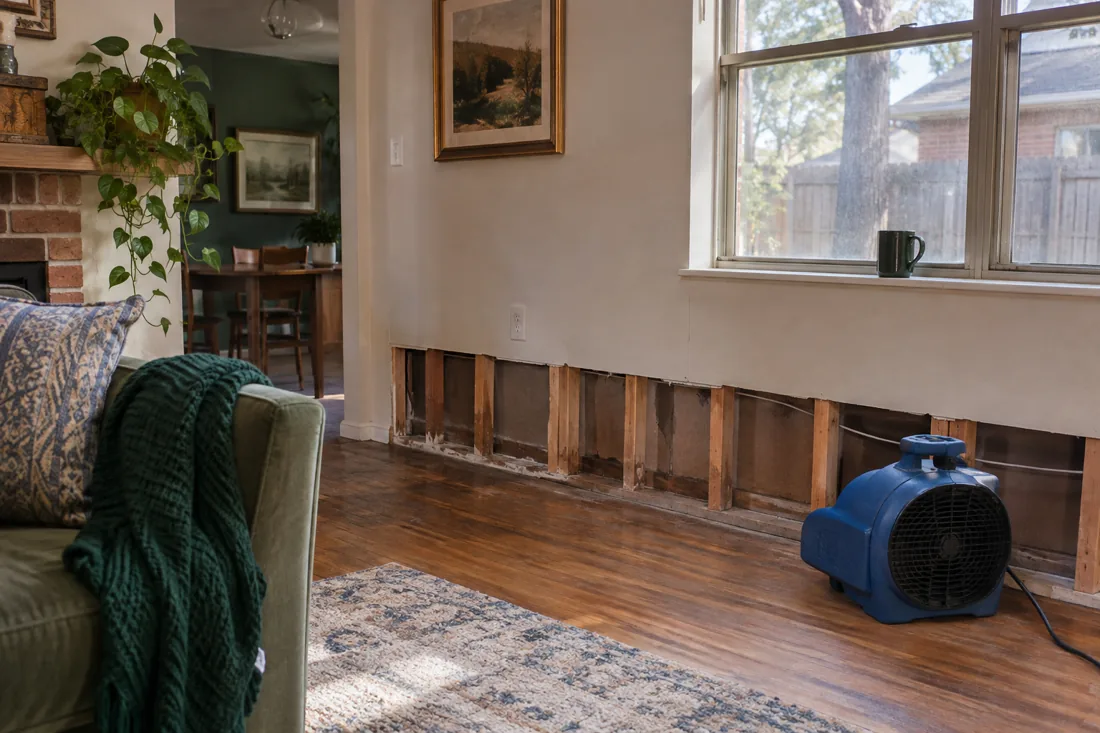 Structural Drying & DehumidificationMoisture trapped in framing, wall insulation, subfloors and cabinet bases after visible water is removed.