
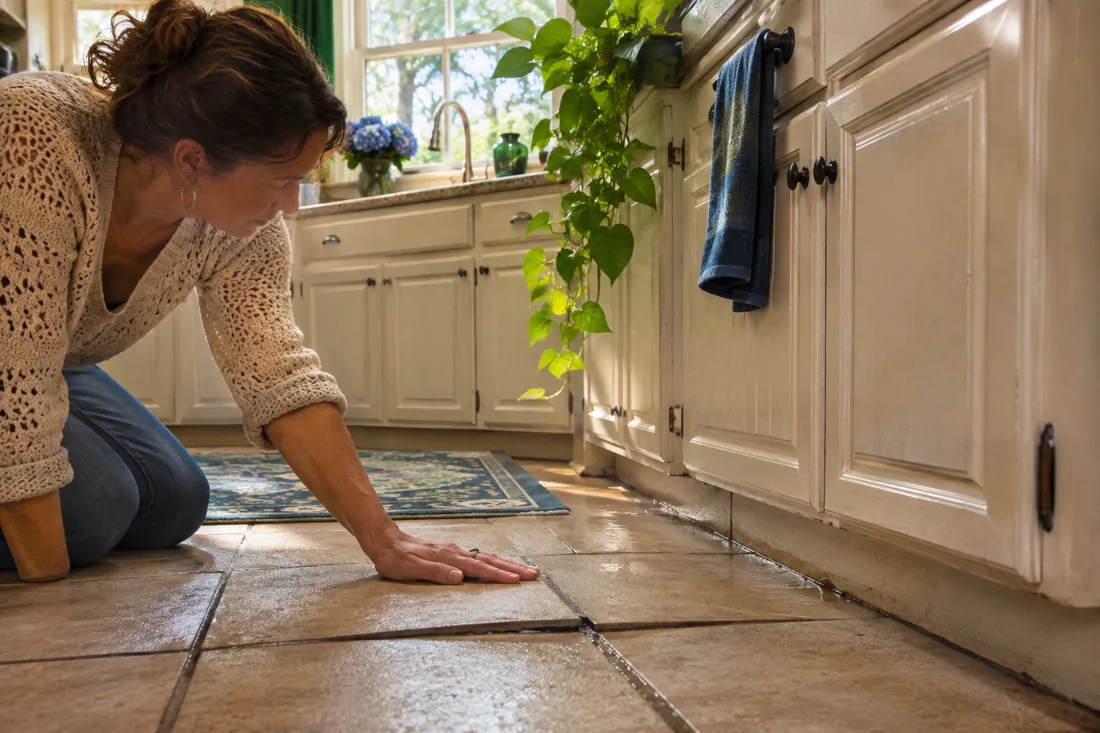
Washer, Dishwasher or Ice Maker Leaking Into the Floor?
Stop the appliance and isolate its water supply if the controls and valve are safe to reach. Keep clear of wet cords and electrical connections.
A washer hose may release water across an open laundry room. A dishwasher connection can leak into the space under cabinets without leaving an obvious puddle in front. An ice maker line may wet the wall behind the refrigerator for longer than anyone notices. Cleanup follows the actual connection and the materials below it.
Fort Worth's mix of older and newer housing means the same appliance may sit over wood subflooring or a slab. Remodeled kitchens can also have multiple flooring layers. The assessment identifies that assembly instead of assuming the surface visible beside the appliance is the only layer that got wet.
How a Kitchen or Laundry Leak Is Assessed
- Call and explain what happened.
A specialist asks about the water source and the rooms affected.
- We find where the water went.
Moisture checks locate wet materials, including inside walls and under floors.
- Water removal and drying.
Standing water comes out first. Drying equipment goes where it is needed.
- Checked dry before repairs.
Materials are confirmed dry before anything is closed up or replaced.
Water still spreading? Call now to speak to a specialist.
(XXX) XXX-XXXXThe Appliance Repair and the Water Cleanup Are Separate Jobs
A technician or plumber must correct the failed hose, valve, fitting or appliance component. Drying the floor cannot compensate for a connection that still leaks during the next cycle. Note whether the water appeared while filling, washing, draining or sitting idle. That sequence helps the repair provider check the right part of the appliance.
Do not repeatedly run a dishwasher or washer to demonstrate a leak into an already wet room. A closed supply valve may stop a feed-line leak while leaving water in the machine or drain hose. A discharge problem needs its own diagnosis. Cleanup planning uses the source history to decide how affected materials should be handled.
Why Water Hides Behind Cabinet Toe Kicks
Cabinet faces can conceal a shallow wet cavity at floor level. Water may travel behind the toe kick, soak the cabinet base and emerge near a different appliance. A sink cabinet next to the dishwasher deserves a check even when its contents look dry. Swelling at a panel edge is another clue that water reached the material's core.
Access is planned before pulling fixed cabinets apart. Removable trim may provide a view, but a damp cabinet bottom or delaminating panel may need a different approach. The specialist explains what must be opened for cleaning or drying. Closing the cavity while its base stays wet leaves the moisture behind the finished kitchen face.
Three Appliance Locations, Three Different Water Paths
The equipment location changes where the first moisture readings belong. A laundry doorway directs attention to adjoining carpet; a refrigerator recess directs it to the back wall and floor seams. Water beneath a second-floor machine also requires a check of the ceiling below.
| Appliance | What to inspect beyond the obvious puddle |
|---|---|
| Washing machine | Wall connections, doorway edges and the room below an upstairs laundry |
| Dishwasher | Cabinet bases, toe kicks and flooring under the machine |
| Refrigerator ice maker | Rear supply connection, wall base and nearby floor joints |
Removing Appliance Water Without Covering the Wet Layer
Accessible water is extracted before equipment is placed around the affected assembly. Moving an appliance requires care around its weight, electrical feed and plumbing connections. Do not drag a heavy machine through standing water or pull it away while attached hoses are strained. Access can be coordinated with the repair provider so that another connection is not damaged.
Drying may involve the wall behind the appliance, the cabinet cavity and the floor underneath. Each is checked separately. On wood flooring, the finish may look unchanged while joints begin to cup. Hardwood floor water damage needs attention to the wood and its support, while structural drying covers the wider assembly.
A Leak That Returns Only During a Wash Cycle
Some leaks appear to stop when the appliance is idle. That does not prove a repaired connection is ready for use. The repair provider should address the source, and the cleanup record should distinguish that repair from moisture remaining in the floor. A new wet reading after the appliance runs can mean renewed leakage rather than slow drying.
Check the room for a damp odor, swollen cabinet edges and stains at a nearby wall base during recovery. Report changes instead of covering the area with a replacement rug or pushing storage against the cabinet. If water has reached a large open area, standing water removal may be the immediate priority before the smaller concealed pockets can be assessed.
The water damage calculator helps organize affected floor area and material types. Appliance replacement and plumbing repair are separate from cleanup scope. A narrow kitchen leak can require more access work than a larger puddle on exposed, reachable flooring.
Sources: EPA wet-material cleanup, Census Fort Worth housing periods.
When an Appliance Leak Reaches Other Materials
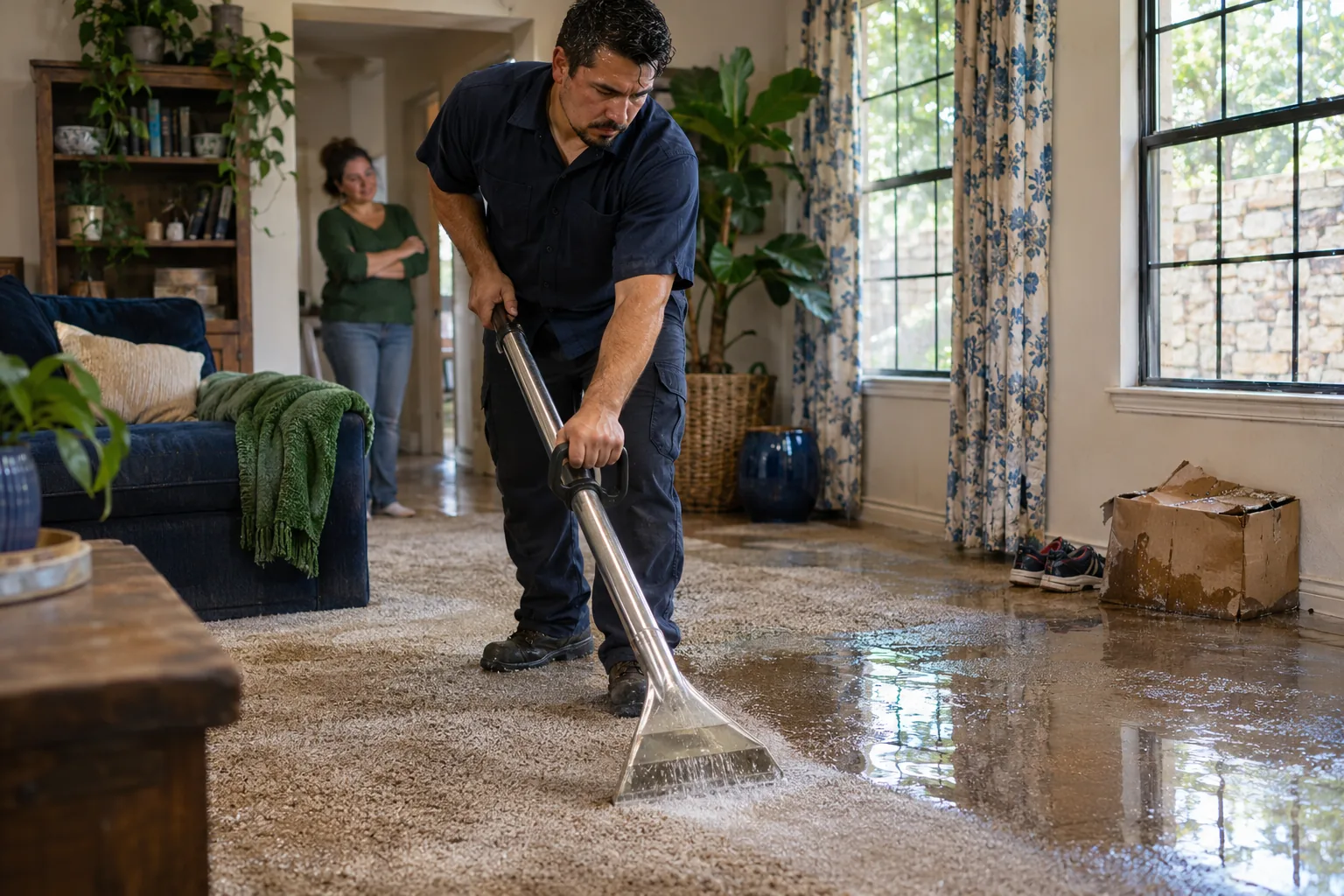 Emergency Water RemovalStanding water spreading across rooms after an indoor supply line breaks or a fixture overflows.
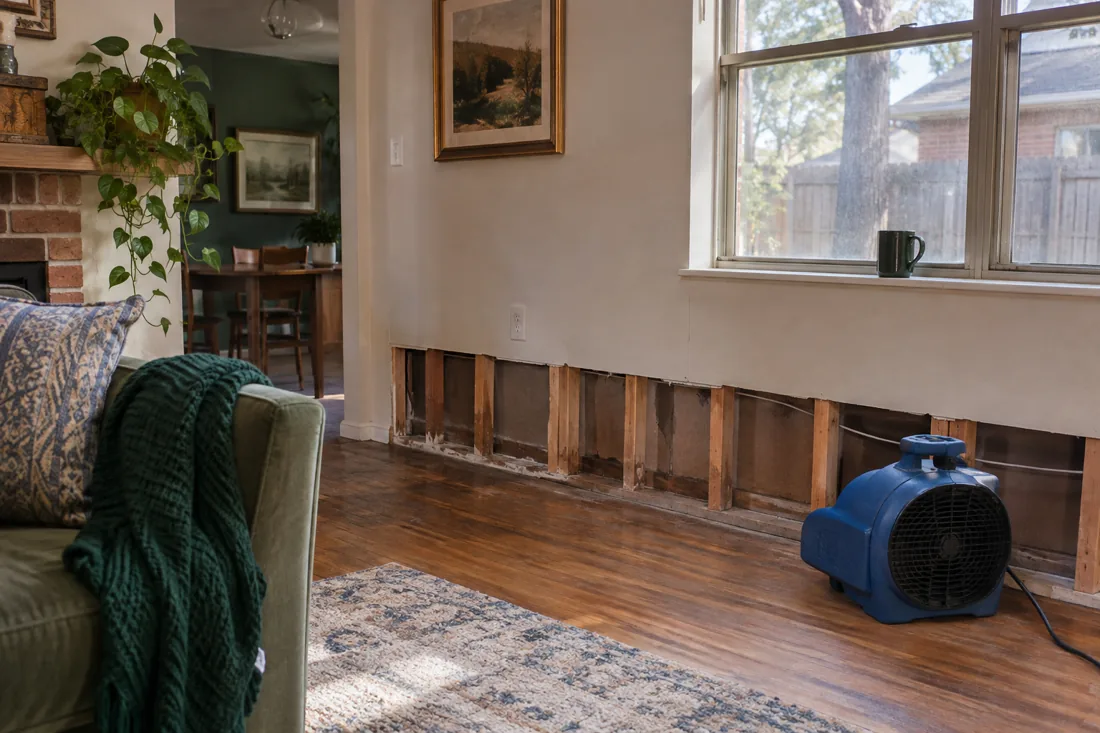 Structural Drying & DehumidificationMoisture trapped in framing, wall insulation, subfloors and cabinet bases after visible water is removed.
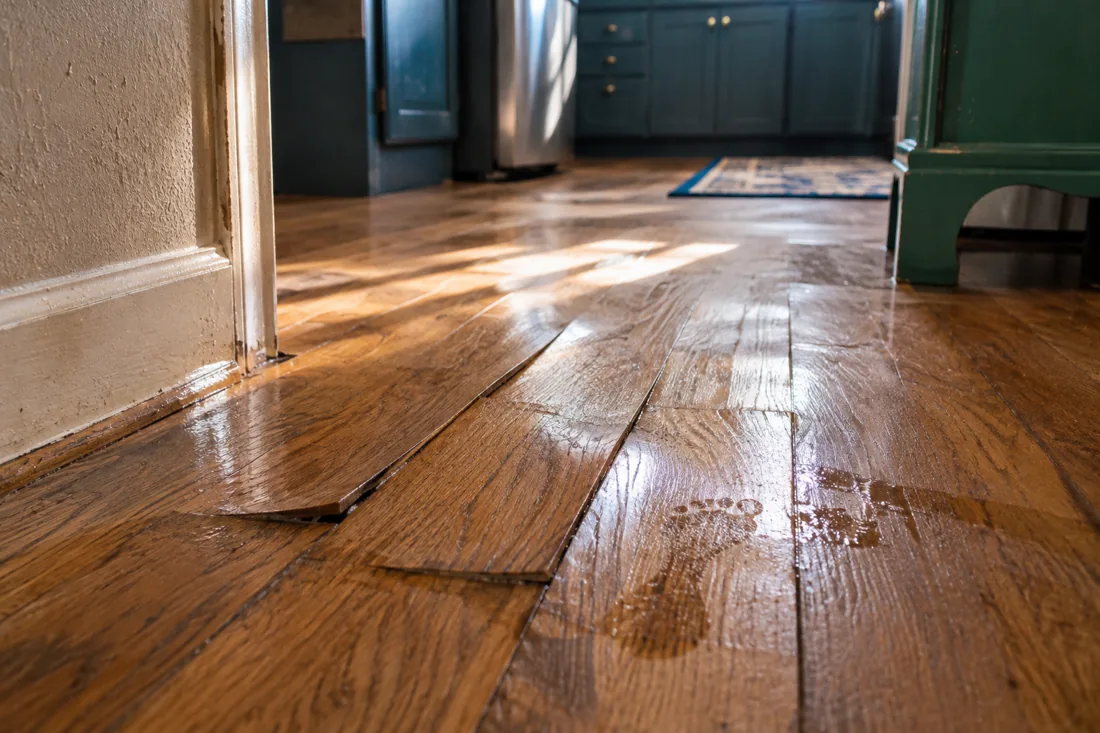 Hardwood Floor Water DamageWater beneath wood flooring causing lifted edges, cupping and damp areas along adjoining walls.